In May and June, 2,636 residents of Leiden, Leiderdorp, Oegstgeest and Katwijk jointly spotted 3,939 species of plants, animals and fungi. From seagulls to sea sparkle, from water beetles to plantain, everything was recorded to help map urban nature. Particularly remarkable is that 491 species were observed for the first time in one of these four municipalities.
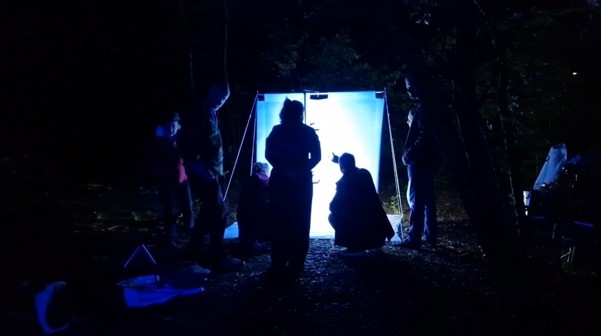
Everyone could take part in Expedition Urban Nature, from toddlers to professors and from allotment gardeners to balcony owners. Residents of the four municipalities used the free ObsIdentify app to identify the species they found. The app helps residents learn which species live in their local area. They could also join more than 50 expeditions in search of moths, bats, waterside plants, salamanders, grasses, lichens, shells, insects and many other animals, plants and fungi found in and around the city.
A helping hand
“We want to organise Expedition Urban Nature every spring, so that after five to ten years we can identify trends among certain species groups,” says Frederic Lens, scientific coordinator of the Leiden Biodiversity Network. “Some groups may increase, while others may show a sharp decline. Scientists can then investigate why certain groups are declining. Based on those findings, we can inform the municipalities about which species need a helping hand. In this way, we improve the nature around us, which benefits everyone, including people,” Lens explains.
The stand-out species of Expedition Urban Nature
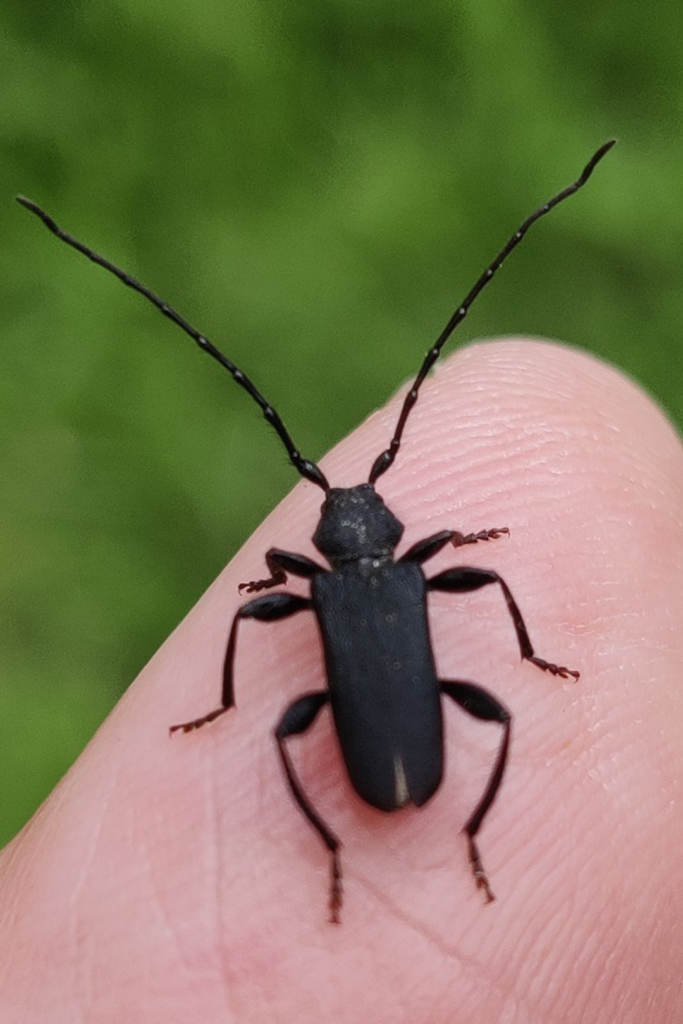
There were also some exceptional discoveries. Of the 3,939 species observed, 65 are considered very rare in the Netherlands. In May, for example, a bearded vulture flew over Katwijk, the calls of a soprano pipistrelle were heard in a city park, and a rare longhorn beetle, the Mesosa nebulosa, was spotted crawling through a food forest in Leiden. This last species has been recorded only 25 times worldwide through ObsIdentify.
Experts continue their work
The actual number of species is probably much higher than 3,939. Although the ObsIdentify app is good at distinguishing between larger species groups, some species are more difficult to identify. The app regularly produces results such as “unknown non-biting midge” or “unknown long-jawed orb-weaver.” Experts from ObsIdentify and its partners will continue improving the app so that these species can also be identified more accurately in the future.
More municipalities are joining
In 2025, only Leiden took part. This year, Leiderdorp, Oegstgeest and Katwijk also joined Expedition Urban Nature. “Biodiversity does not stop at municipal boundaries. If we want to understand the state of nature in Leiden and the wider region, we need to map that area as comprehensively as possible,” Lens says.
The aim is for more municipalities to take part every year. “Perhaps one day we could organise a national Expedition from Leiden. That would be fantastic.”
Each municipality had a different species in first place. Residents of Leiden most frequently spotted the common carder bee. In Oegstgeest, the red admiral butterfly was photographed most often, while in Katwijk the bedstraw broomrape, a plant, was observed most frequently. In Leiderdorp, a bird topped the list: the Eurasian reed warbler.
“It is interesting to see that Leiderdorp apparently has many active birdwatchers. All of the municipality’s top ten species are birds,” Lens says.
Closing event
Expedition Urban Nature 2026 will conclude with a festive closing event in the free LiveScience hall at Naturalis on Friday, 3 July, from 15:15. Everyone is welcome to attend.
During the event, we will take a closer look at the results of Expedition Urban Nature and announce the winner of the schools challenge. There will also be enjoyable activities and more information about other citizen science projects in the Leiden region.
Have you always wanted to contribute to science? Come along and discover which project suits you.
More information
This is a press release from the Leiden Biodiversity Network, or LBN. LBN is a partnership between Naturalis Biodiversity Center, Leiden University, Leiden University of Applied Sciences and the Municipality of Leiden. It is a network of biodiversity scientists working to strengthen Leiden’s position as the biodiversity capital of the Netherlands.
For questions about Expedition Urban Nature, please contact Frederic Lens, a researcher at both Leiden University and Naturalis.
Images can be found in this press kit. Please use the credits stated in the file or folder name.
Full details of the count can be found on the Expedition Urban Nature page on Waarneming.nl.