Ovaries age faster than the rest of the body. Once women reach their mid-thirties, their supply of eggs begins to decline sharply and menopause comes closer. This natural process affects fertility and increases the risk of health problems such as osteoporosis, cardiovascular disease and Alzheimer’s disease.
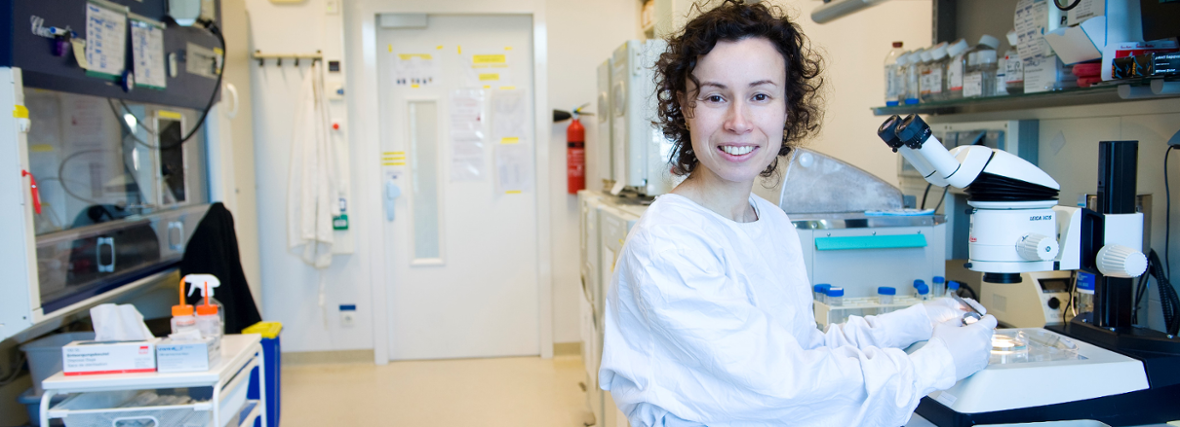
Researcher Susana Chuva de Sousa Lopes, Professor of Developmental Biology at LUMC, is investigating whether this process can be slowed down. For this research, she has been awarded an ERC Advanced Grant, one of the most prestigious European research grants. With the €2.5 million grant, she aims to find out how ovaries can remain healthy and functional for longer.
For Lopes, the motivation for this research is both scientific and personal. “I am at the age where menopause is getting closer. Suddenly you see what may be coming your way: sleep problems, physical symptoms and mental fluctuations. For many women, that prospect is simply not pleasant.”
The ovary is the first organ to age
The ovary is the first organ to age irreversibly. Yet it is still not sufficiently understood why this process begins so early. Lopes wants to better understand exactly what happens as women get older and which mechanisms play a role.
“The goal is not to change nature, but to give women more healthy years,” she says.
According to Lopes, menopause often occurs today at a time when women are still fully active in their careers. At the same time, people are having children later in life, while the body does not automatically keep pace biologically. As the supply of eggs decreases and production of the hormone oestrogen declines, the risk of conditions such as osteoporosis, dementia, cardiovascular disease and fractures also increases.
“If we could stretch that process by a few years, or even ten years, it would make a major difference for many women.”
Research into blood vessels, nerves and energy supply
Together with her research group, Lopes is mapping how blood vessels, nerves and energy supply in the ovary change during ageing. Using advanced 3D imaging and precise measurements, the researchers want to find out why follicles, the fluid-filled sacs in which eggs develop, start to function less effectively at a certain point.
The team is also investigating various strategies that could potentially slow ageing. One area of focus is short-chain fatty acids, natural substances produced by gut bacteria. These may be able to prevent eggs from becoming active too early.
The researchers are also examining whether stem cell therapy can improve blood flow in the ovaries. By adding supportive cells, they hope to make the environment surrounding the eggs stronger and healthier. In addition, they are looking at whether vascular wall cells can stimulate the growth of new blood vessels in older ovaries.
Not only fertility
Although slower ovarian ageing could potentially also affect fertility later in life, Lopes says this is not the main focus.
“In theory, women could remain fertile for longer, but egg quality already declines sharply before menopause. Even if a woman still has a menstrual cycle, the quality of her eggs has often already decreased.”
If the research ultimately also contributes to better egg quality, she says that would be a valuable additional benefit. “But the focus is on health.”
Intervening in the ageing process
The question of whether scientists should interfere with natural ageing processes regularly attracts attention. Lopes sees her research as a logical extension of existing medical progress.
“In a sense, everything in medicine is a form of tinkering. Taking antibiotics or receiving a blood transfusion are also forms of intervention.”
According to her, a solution does not necessarily have to come from medicines or complex treatments. The research also looks at lifestyle and nutrition. “We know, for example, that women who eat little fibre, on average, enter menopause earlier. Perhaps we can influence the process through nutrition or supplements.”
Careful use of donor tissue
For the research, the team uses donated ovarian tissue. This tissue comes from women who had ovarian tissue frozen before cancer treatment for their own fertility and gave permission for it to be used for scientific purposes after their death. Ovarian tissue donated for research by transgender people during their transition is also being used.
More healthy years for women
Lopes ultimately hopes to better understand which biological processes are responsible for ovarian ageing and whether those processes can be influenced.
“Perhaps we will find a particular substance, or we may be able to show that something as simple as eating more fibre has an effect on this process. Only once we see in the laboratory that a mechanism can be influenced can we investigate whether it also has an effect in women.”
For now, the research remains fundamental in nature. “That is still something for the future. First, we need to know whether ovarian ageing can be slowed down at all.”
Europe recognises the importance of slowing ovarian ageing
The ERC Advanced Grant is intended for experienced researchers who want to investigate innovative, high-risk ideas that could have a major impact. Only a small proportion of applications are awarded funding. The fact that Lopes has received this grant means that Europe recognises the importance of slowing ovarian ageing and the potential health benefits this could offer women.