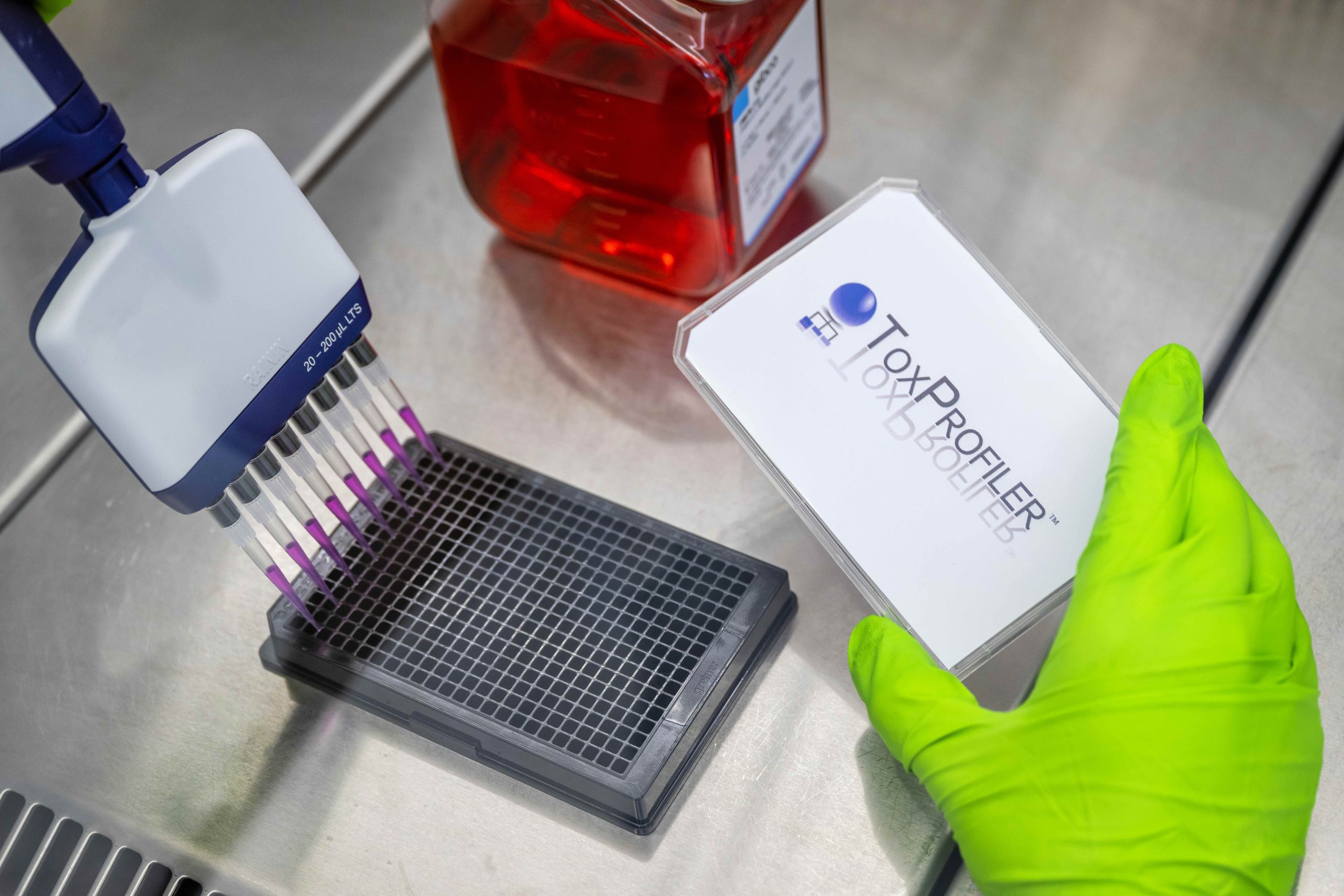
Toxys and Unilever have joined forces to advance New Approach Methodologies (NAMs) for assessing cellular stress—an essential factor in Next Generation Risk Assessment (NGRA). This collaboration aims to refine non-animal testing approaches by validating ToxProfiler, Toxys’ advanced assay, and expanding its application to include mitochondrial toxicity—one of the key mechanisms behind cellular and organ stress.
Advancing Chemical Safety with NAMs
Current in vitro chemical safety assessments often rely on broad cytotoxicity measurements, which provide limited insight into the underlying mechanisms of toxicity. As regulatory frameworks move towards more human-relevant, non-animal approaches, there is a growing need for NAMs that can detect cellular stress responses with high precision.
ToxProfiler, a unique assay developed by Toxys, uses genetically engineered cell lines to distinguish between different stress responses in a dose-dependent manner. This capability makes it a powerful tool for predicting human toxicity more accurately.
Expanding Insights into Mitochondrial Toxicity
As part of the collaboration, Toxys will further develop ToxProfiler MAX, an extension designed to assess mitochondrial toxicity using the Glu/Gal switch approach. This method evaluates the impact of test compounds in high-glucose versus galactose-based media, where cells rely solely on mitochondrial metabolism. Differences in toxic response under these conditions provide key insights into the mode of action of chemical compounds.
The partnership will validate this approach and explore potential enhancements, including the use of additional reporter genes, morphological markers, and functional assays to improve mitochondrial toxicity detection.
Unilever’s Commitment to Non-Animal Testing
Unilever is committed to pioneering exposure-led, hypothesis-driven risk assessments under the NGRA framework, ensuring chemical safety decisions are made without the use of animal data. The company integrates a range of non-animal testing strategies, from computational models (QSARs) to in vitro assays, leveraging innovative NAMs like cellular stress profiling.
This collaboration builds on a successful partnership between Toxys and Unilever, which previously worked together to develop and validate ReproTracker, an assay designed to assess developmental toxicity.
By expanding the capabilities of ToxProfiler, this initiative strengthens the transition toward more ethical, efficient, and human-relevant safety testing methods.