Discharging a patient from intensive care too early raises the chance they’ll be readmitted, which comes with more complications and a higher risk of death. Keeping someone in the ICU longer than necessary carries its own dangers, including hospital-acquired infections. For intensivists, that timing is one of the harder calls to get right.
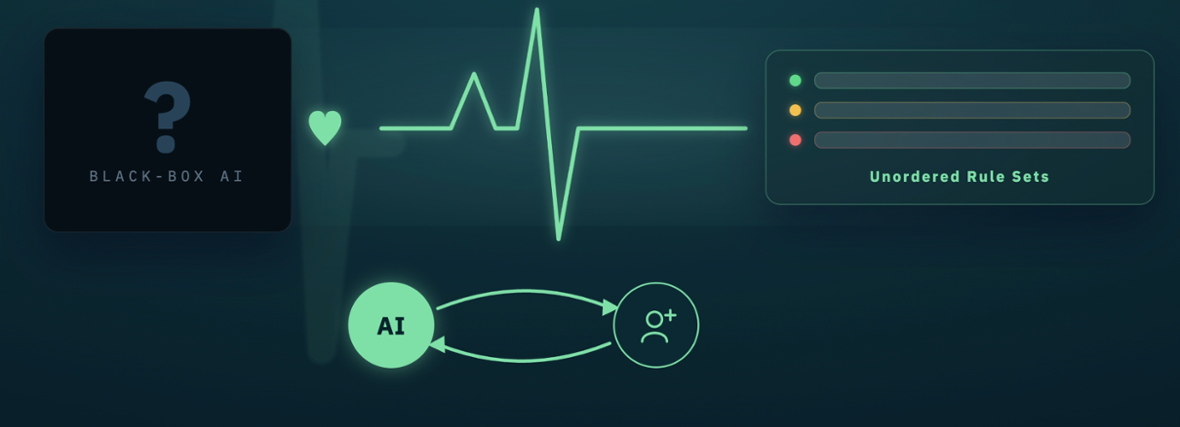
Researchers at Leiden University Medical Center (LUMC) and the Leiden Institute of Advanced Computer Science (LIACS) have built an AI model to support that decision. It predicts the risk that a patient will return to the ICU, and, unlike most systems, it makes clear which criteria the prediction rests on.
That transparency is the whole point. “The key question was: is the outcome logical and well-founded?” says postdoctoral researcher Lincen Yang, who first explored the underlying method in 2023 with Matthijs van Leeuwen, professor of explainable machine learning. Most models available to ICU doctors come in one of two flavours: strong at flagging high-risk patients but silent on the reasoning, or explainable in a way that doesn’t match clinical reality. On a ward where decisions can be a matter of life and death, neither is enough.
The team’s model works from a set of unordered rules. Where many algorithms chain their logic together, so that each decision depends on the one before, these rules stand on their own, which makes them easier for a doctor to follow. Trained on ten years of ICU data, the model sorts patients into five groups, each with its own risk profile, so clinicians can see which factors drive a raised chance of readmission.
One profile stood out. Patients whose white blood cell count rises sharply in the final 24 hours before discharge, a possible sign of an emerging infection, were readmitted more than three times as often as average. For a doctor, that is reason to run further tests or hold the patient in intensive care a while longer.
The model is not meant to replace clinical judgment, and it isn’t yet in use. An algorithm can process a decade of patient data no doctor could hold in their head, but it never sees the patient at the bedside. “Transparency of algorithms is important not only for users, but also for the government and society,” Yang notes. What the study shows is that AI can support intensivists without asking them to trust an opaque black box.
The research was carried out by Lincen Yang and Matthijs van Leeuwen (LIACS), together with technical physician Siri van der Meijden and anaesthesiologist-intensivist Sesmu Arbous (LUMC).